Weaving with natural fibres has been a cornerstone of the culture and livelihood of the communities inhabiting present-day Colombia since pre-Hispanic times.
In south-eastern Santander, as well as in parts of Cundinamarca and Boyacá, the Guane people stood out for their deep connection to the land and their remarkable manual skill. This culture, devoted chiefly to hunting and agriculture, developed a sophisticated visual expression through ceramics and textile work.
The distinction between materials reveals a precise understanding of the properties of each fibre. While cotton was reserved for fine blankets and richly decorated outer garments, fique was the material of choice for everyday goods: headdresses, bags and mochilas (shoulder bags). It was not a hierarchy of prestige but an assignment by function. Cotton kept you warm; fique carried, resisted and lasted.
The Guane assigned each fibre to a different use. Which does each piece belong to?
- Fine blankets
- Mochilas
- Outer garments
- Headdresses
- Bags
That technical decision, taken centuries ago, still holds. The designs of those pieces bear a striking resemblance to the ones contemporary artisans continue to produce in Aratoca and the neighbouring municipalities. The shape of the mochila, the logic of the braid, the way an edge is finished: these are gestures that crossed the colonial period, the Republic and industrialisation without losing their essential structure.
A scarce testimony, and invaluable for it
Because the physical remains of Guane culture are scarce, the textile pieces that have survived hold incalculable anthropological value. Plant fibres are by nature perishable: they break down with damp, heat and time. That some have survived makes them living testimony to a technical mastery thousands of years old.
Do many textile pieces of the Guane people survive today?
This has a direct consequence for the present. Every artisan spinning and weaving fique in Aratoca today is not simply practising a trade: they are sustaining the only working version of that knowledge that remains.
Museums preserve the objects. Hands preserve the method.
On the transmission of fique knowledge
From Guane territory to the municipality of Aratoca
The history of Aratoca is deeply bound to the cultivation, processing and ancestral weaving of fique fibre. This tradition, inherited from the indigenous Guane culture, became for decades the economic engine and the main source of employment for thousands of rural families in the region.
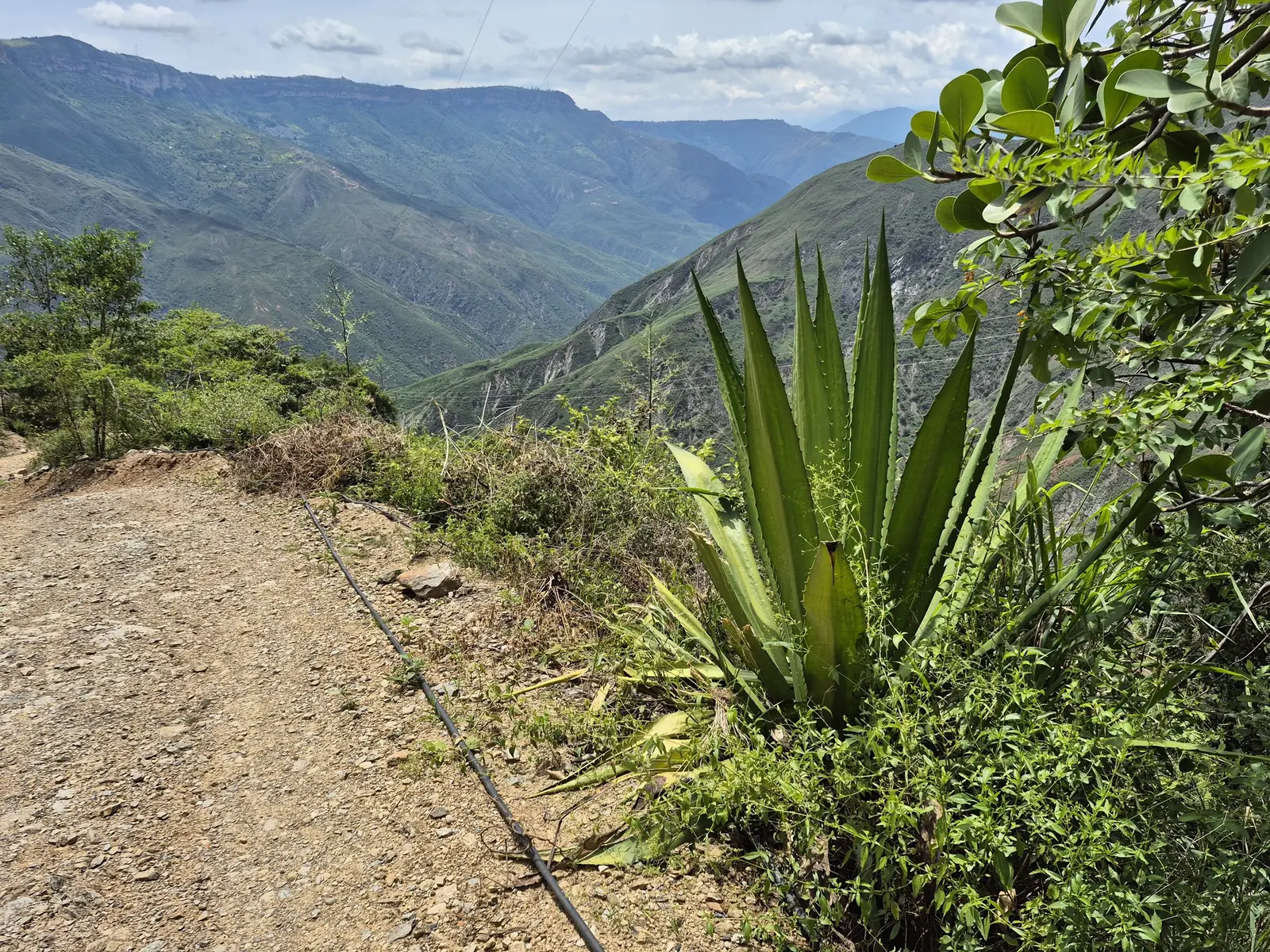
That continuity was not accidental. Fique thrives in poor, steep soils with low moisture retention — exactly the conditions that characterise much of Aratoca’s territory. Where other crops demand irrigation, flat ground or constant fertilising, fique settles in and persists. That fit between plant and landscape explains why the trade took root here so firmly and why it held for generations.
A second condition was social: the knowledge was widely distributed. In Aratoca, much of the rural population learned to spin and weave fique from childhood, passing the knowledge from one generation to the next. There was no closed guild and no specialised workshop monopolising the technique. The knowledge lived in the houses.
In Aratoca, a closed guild kept the technique of fique to itself.